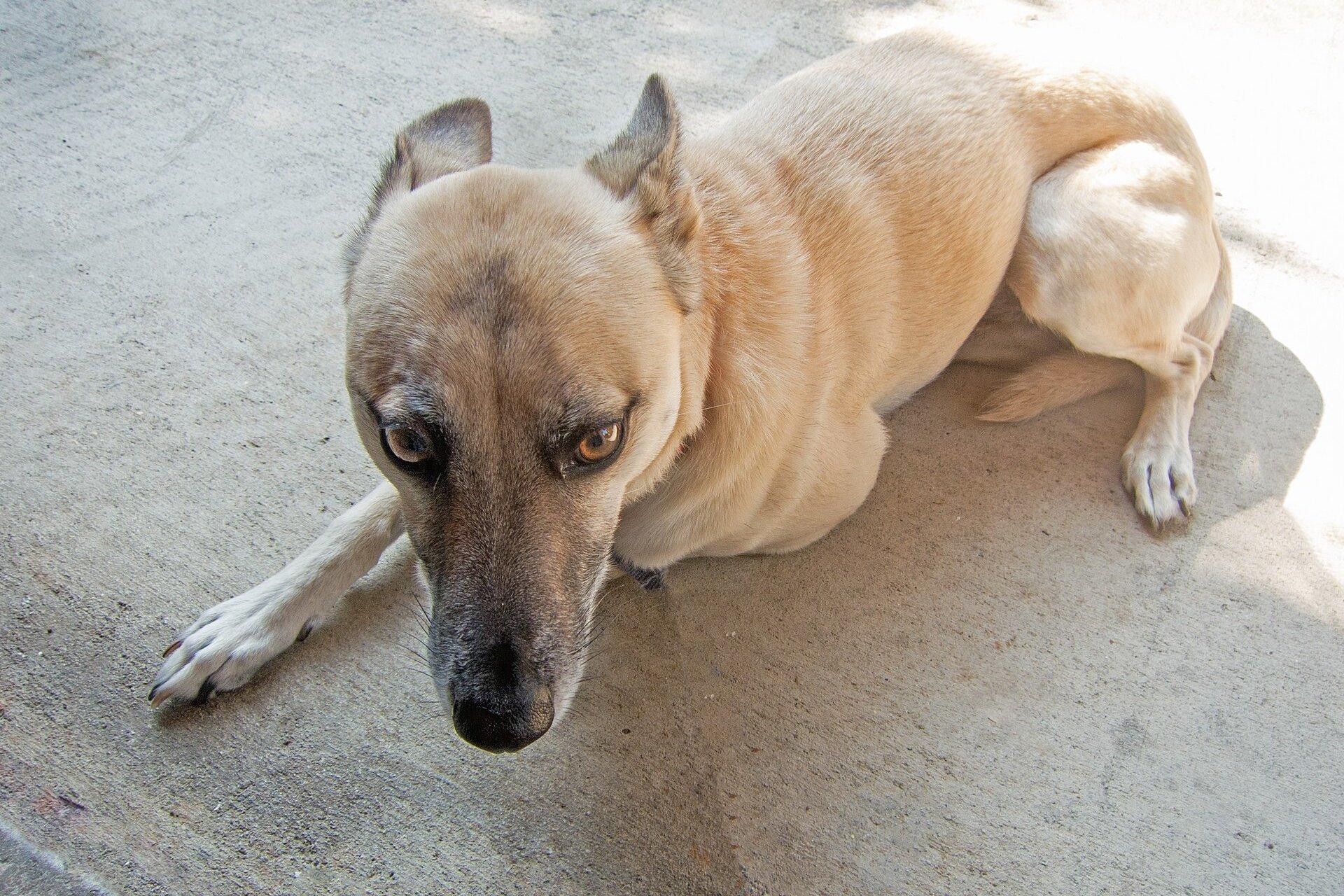
Some dogs are nervous of almost everything new. Others are fine most of the time but anxious about one thing, such as visitors, other dogs, traffic or loud noises. Either way, there is a lot you can do to help your dog feel safer, and help is available if it's not enough.
In short: give your dog space and choice, keep them away from what frightens them where you can, never force them to face it, and reward calm choices. If your dog's behaviour has changed, or the fear is affecting their everyday life, see your vet first to rule out pain or illness.
What are the signs of an anxious dog?
Early, quieter signs are easy to miss1:
- turning their head or body away
- licking their lips or yawning when not hungry or tired
- ears pulled back, or the whites of their eyes showing
- sudden stillness or freezing
- tension in the body and face, or seeming quiet or “sad”
As a dog gets more worried, you may see1:
- a lowered or tucked tail, cowering or hiding
- shaking or trembling
- whining, barking or growling
- panting or drooling when they're not hot or tired
- pacing, or not responding to words, treats or toys
A very frightened dog may try to run away, lunge, snap or bite, or wee or poo without meaning to1. Going off their food is another common sign2.
Why is my dog nervous?
There is usually more than one reason1:
- Genetics. Some dogs inherit traits that make them more emotionally reactive.
- Early life. Puppies who felt anxious or overwhelmed by new things are more likely to be worried later.
- Past experiences. A bad experience can leave a dog linking that thing with fear.
- Pain or illness. A dog's physical health can strongly affect how they feel and behave.
- Changes. Big changes to routine or surroundings can be stressful.
- Training methods. Methods based on fear, pain or intimidation are strongly linked with more fear, anxiety and aggressive behaviour.
Common triggers include being left alone, loud noises such as thunderstorms or fireworks, and unfamiliar dogs or people2. Several stressful things in a short time can also “stack up”, so a dog copes less well later in the day1.
How to help a nervous or anxious dog
- Give them space and choice. Let your dog move away from things they find frightening, and don't force them to meet people or dogs1.
- Create distance. If something worries them, increase the distance between your dog and it1, and where possible avoid it for now2.
- Make a safe space. A cosy den gives your dog somewhere to go when they feel afraid12.
- Comfort them. It's fine to comfort your dog, especially if they come to you for reassurance2. Reassure them gently and keep your own movements slow and steady1.
- Reward calm choices. Praise and treats when your dog chooses to stay calm or investigate something new help them feel more confident1. Scattering treats on the floor to sniff out can help them settle1.
- Go at their pace. Building up good associations gradually, a little at a time, is the way to change how a dog feels about something21.
What not to do
- Don't tell your dog off for being scared, or force them to meet people or dogs1.
- Don't make them “face their fear”. It could make things worse1, and flooding (exposing a dog to their fear all at once) should never be used2.
- Avoid trainers whose methods rely on fear, pain or intimidation1.
When to see your vet or a behaviourist
Even though fear and anxiety are usually behavioural, it's still best to take your dog to the vet first2. Your vet can look for any medical problem that could be making your dog anxious2. See your vet especially if your dog's behaviour has recently changed, or they seem agitated, restless or are acting strangely1.
If needed, your vet can refer your dog to an accredited behaviourist2. Clinical Animal Behaviourists, Veterinary Behaviourists and Accredited Animal Behaviourists only see clients on veterinary referral (ABTC). For milder nervousness, an Animal Behaviour Technician can help with day-to-day training. Our guide to trainers, behaviourists and vets explains the difference.
Related guides
- Anxious when left alone: separation anxiety in dogs
- Scared of loud noises: dog scared of fireworks
- Barks or lunges at dogs or people on walks: reactive dogs
- Helping a puppy grow up confident: puppy socialisation
Free help
Living with a fearful or anxious dog can be hard for both of you. The charity Dogs Trust runs a free Behaviour Support Line for UK dog owners. If you're worried about your dog's health, your own vet practice is always the first call.