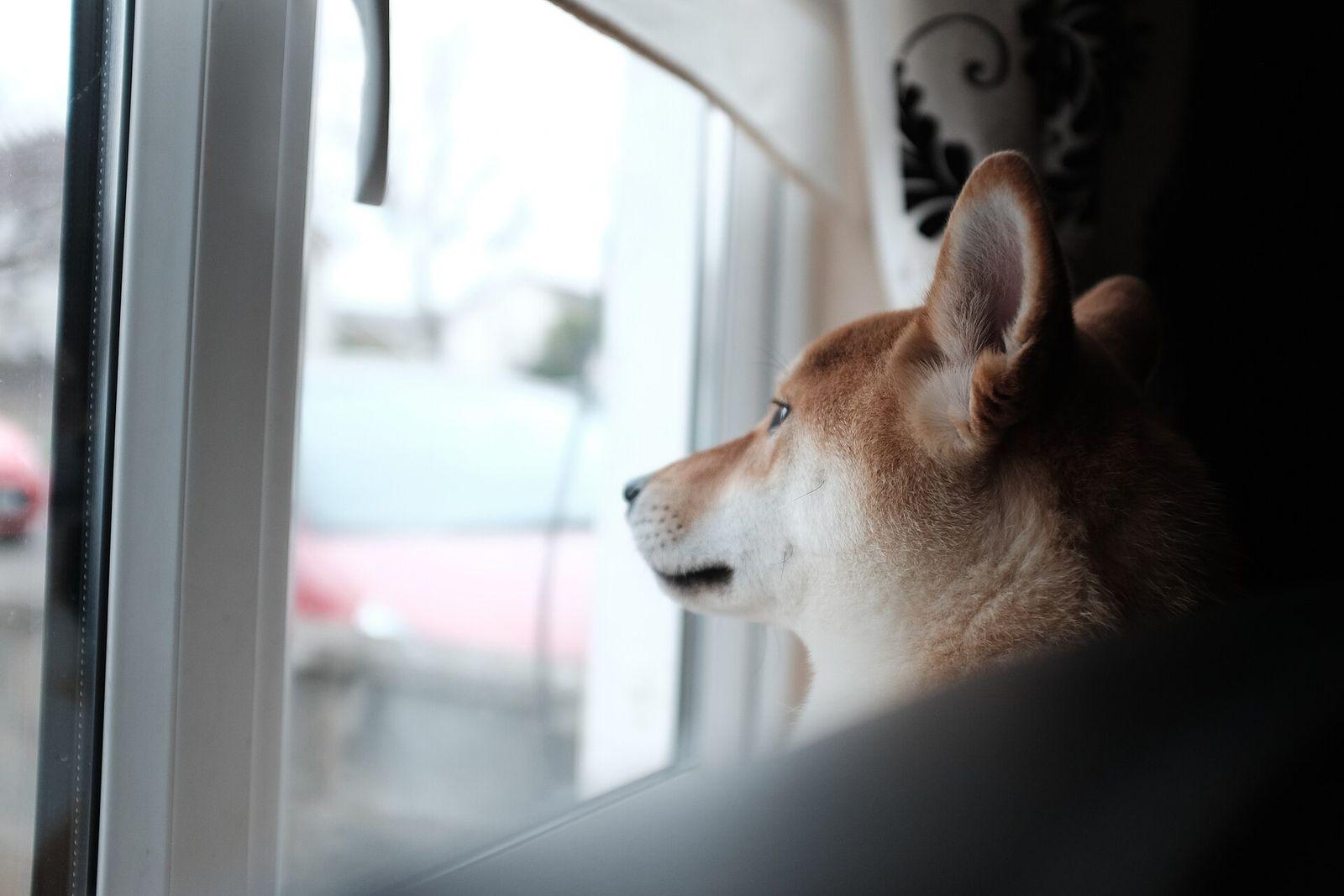
Coming home to a chewed door, a puddle, or a neighbour's note about howling is hard, and it's even harder knowing your dog was upset while you were out. You're far from alone: research suggests that 8 out of 10 dogs find it hard to cope when left alone, and half of them show no obvious signs1. The good news is that most dogs improve with the right help, though it takes time2.
What separation anxiety is
Some dogs feel anxious when they're separated from their owners, and show unwanted or destructive behaviour as a result3. Vets now often use the broader term “separation-related problem”, because not every dog that struggles alone is anxious: some feel scared, panicked, frustrated, bored or even over-excited2.
Signs to look for
- Barking, whining, whimpering or howling3
- Chewing or destroying furniture1, or digging and ripping at things2
- Trembling, panting or drooling, which are easier to miss but still signs of distress3
- Placing themselves between you and the front door3
- Licking, nibbling or biting at their own body2
- Not eating meals, treats or food toys while you're out, and over-the-top excitement when you get back1
These signs usually start within a few minutes to half an hour of you leaving1. Because many dogs show nothing obvious, it's worth filming them: set up your phone to record, or use a camera you can check from another device3.
Anxious or bored?
It's tempting to see boredom or frustration as less serious than anxiety3, but they still need help. One clue: if your dog will not eat or play with toys when alone, but does when you're there, they're likely to be anxious3.
Why it happens
Most often, a dog simply has not learnt that being alone is okay3. Other common reasons include:
- not getting used to being left gradually when they were young2
- being very attached to one person in the household2
- a fear of certain noises, which can make being alone more frightening2
- expecting something bad to happen each time they're left2
- family history: puppies whose parents and relatives have separation anxiety are more likely to have it3
Health problems can also cause or worsen separation-related behaviour1, which is why a vet check comes first.
What you can do now
- Avoid leaving them alone while you get help. A dog sitter or dog walking service can keep your dog company1.
- Build up time alone very slowly. Start with a few minutes and only increase it if your dog is relaxed3. If at any point your dog starts to struggle, go back a step3.
- Give them something good to do. Make sure your dog has interesting things to do when you're not with them, and that they're not hungry when you go1.
- Keep absences short. Even for a relaxed adult dog, Dogs Trust recommends a maximum of four hours alone3, and for puppies much less1.
What not to do
- Do not punish or tell them off. However frustrating it is, never punish your dog3. If you come home to a mess, do not shout or show disappointment: it can scare your dog and make things worse1.
- Do not leave them to “cry it out”. Dogs left to cry it out only learn that being alone is terrifying1.
- Do not rely on a crate. Crate training alone will not stop a dog worrying about being left, and there's a serious risk of injury if a dog panics in a crate3.
When to see a vet
If you think your dog has separation anxiety, or you notice a sudden change in their behaviour, contact your vet2. Pain and illness can be behind behaviour changes, and your vet can talk you through every option, including any treatment that might help alongside training. We do not give veterinary advice, and nothing here replaces a check-up.
Getting professional help
Getting in touch with a qualified professional is the best way to stop the anxiety getting worse3. If home changes have not helped, the RSPCA suggests talking to your vet, who should refer you to a clinical animal behaviourist to find the underlying cause and build a plan for your dog1. Clinical Animal Behaviourists, Veterinary Behaviourists and Accredited Animal Behaviourists only see clients on veterinary referral (ABTC), and CCABs typically work on veterinary referral too.
Because the problem happens at home, many behaviourists can help by video call and from videos of your dog alone. See our accredited professionals who work online, or find someone near you from our city pages. Before you book, our guide on how to check a behaviourist's accreditation shows how to check someone on a public register, and what a behaviourist costs gives typical UK prices.
If you need advice first, Dogs Trust runs a free Behaviour Support Line, and suggests calling it as soon as you can3.
Barking that happens mostly at night? See why does my dog bark at night? For noise fears, our fireworks guide may help. And for the roles of trainers, behaviourists and vets, see who should you see: trainer, behaviourist or vet?