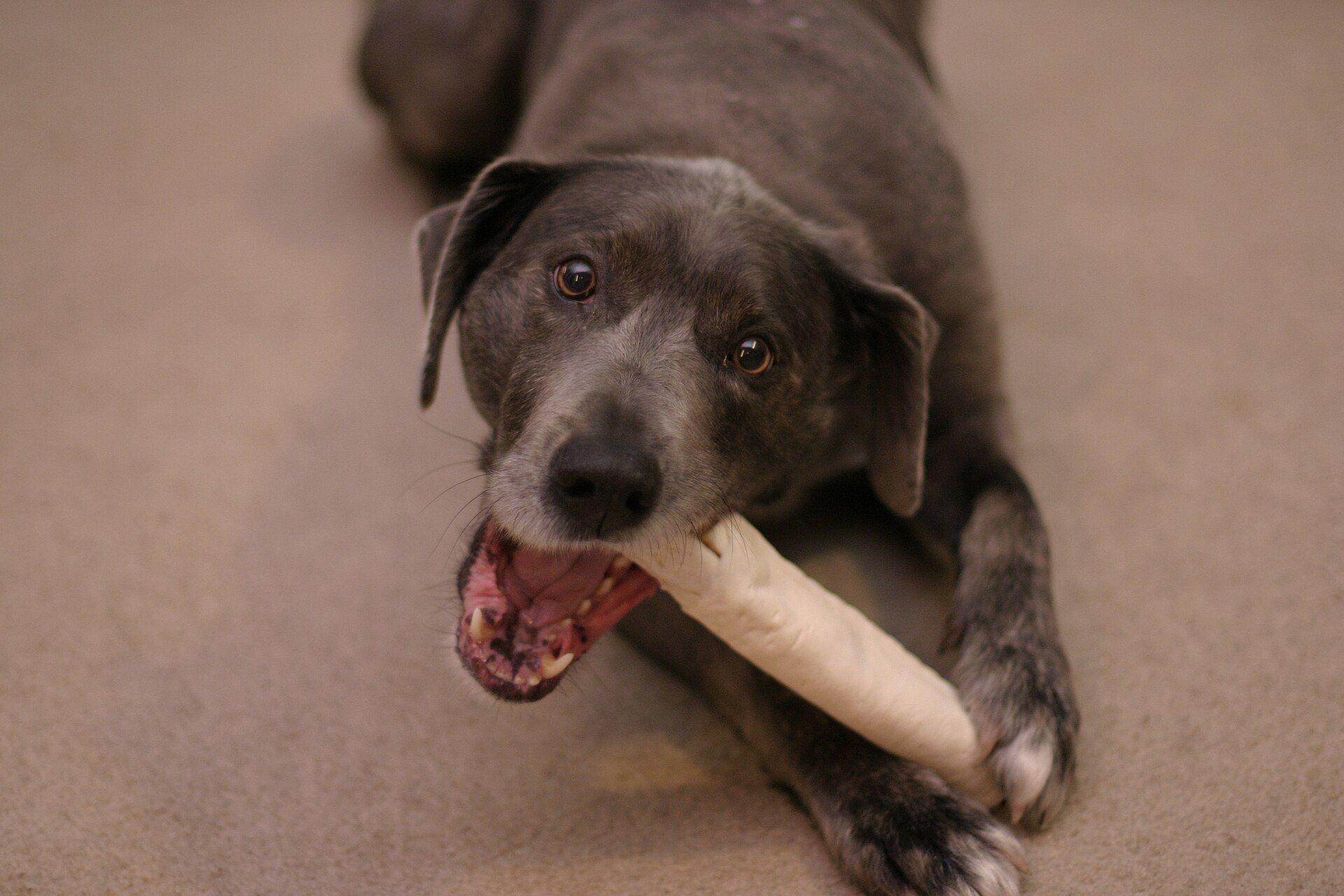
A growl over a food bowl, a freeze over a chew, or a snap when someone walks past the sofa can be a shock, especially from a dog who is otherwise friendly. Resource guarding is common, it's a natural behaviour, and there's a lot you can do to keep everyone safe while you get help1.
What resource guarding is
Resource guarding is when a dog becomes defensive to keep you away from something they treasure2. Food, toys, rest spots, females in season and chews can all be guarded, and sometimes people and animal friends too. Dogs may guard things from people, other dogs or other animals1.
It is not dominance, “naughtiness” or spite: it's an instinctive, often fear-based, response1. The idea that guarding means a dog is “dominant” has been shown to be wrong1.
Signs to look for
A guarding dog is asking for space between themselves and whoever they see as a threat, often with several signals at once1. Early signs include:
- “whale eye”, where the whites of the eyes show1
- tension in the face and body1
- using their body to block access to the item, or staring at the person or animal1
If those are not heeded, a dog may go on to:
- run away or hide the item, or lower their body over it1
- eat very quickly, or swallow things that are not food so they do not lose them1
- lunge, snap or bite1
Dogs that swallow things that are not food, or eat very quickly, are at risk of dangerous medical problems, so speak to your vet if that sounds like your dog1.
Why dogs guard
- Fear of losing something valuable is the main reason. Repeatedly taking things away, or telling a dog off for guarding, is likely to make that worry worse1.
- Competition. A puppy repeatedly pushed off their bowl by another dog may learn to protect it1.
- Past success. If guarding has kept things safe before, a dog is more likely to do it again, and it can become a habit1.
- Stress and over-excitement. When several stressful things happen close together, even a resilient dog can be overwhelmed and more likely to guard1.
- Pain and illness. There are strong links between guarding and being in pain or unwell, and conditions or medicines that affect hunger can make food guarding more likely1.
If your dog is guarding right now
- Stay calm. Do not raise your voice, make sudden movements or tell your dog off, and do not chase or corner them1.
- Give space. Calmly move away. If the item is not harmful, let your dog keep it until they've finished1.
- If the item could be harmful, call your dog away or make a distraction, like knocking on the door, reward them for moving away, and use a door or baby gate to keep you safe while you pick it up1. Scattering tasty treats a good distance away gives you time to pick the item up safely2.
- Keep a note of what happened before, during and after, which helps any professional you work with1.
Keeping everyone safe at home
- Make it a household rule: everyone, including visitors, leaves your dog alone while they eat or have a chew2.
- Feed somewhere quiet. Feed your dog where they will not be interrupted, or in a separate room or behind a baby gate1.
- Put things out of reach. Hide or remove anything your dog might steal and guard, so you do not have to confront them2. Avoid giving long-lasting chews in busy parts of the house1.
- Swap, do not take. If you must get something back, offer something as good or better, thrown past your dog, and pick the item up once they've moved to it1.
- Beds and sofas. Baby gates, closed doors and a pen around a favourite spot can stop clashes, and your dog should have their own safe place to rest undisturbed1.
At Christmas and other busy times
Christmas often means visitors, children and food around the house. If your dog guards, Dogs Trust's advice for visitors and children is worth putting in place before the guests arrive:
- Keep your dog apart from visitors and children while you get professional help. It's a short-term answer, but the safest one1.
- Clear the decks. Remove anything your dog might guard and make it a strict household rule, for example no food in the living room, so nobody leaves a plate or drops crumbs1.
- Give them a quiet retreat where they can enjoy their things away from visitors and children1, and make sure visitors and children know not to approach your dog1.
- Always actively supervise children and dogs together1.
What not to do
- Do not punish or tell your dog off for guarding. It adds stress and may make the behaviour worse2.
- Do not keep taking things away to “teach” them. It proves their worry right and is likely to make them guard more1.
- Do not try to fix existing guarding on your own. Teaching “leave” is useful, but if your dog already guards, Dogs Trust recommends teaching it with a qualified professional1.
Preventing it in puppies and new dogs
Puppyhood is the best time to teach a dog they do not need to worry about losing things1, and prevention is worth doing even if your dog shows no signs2. Battersea's routine: as your dog finishes a meal, walk up, drop a few treats near the bowl and calmly walk away, and repeat over a few days. Over time your dog looks up as you approach, expecting something good2. The same idea works with toys and chews: put a few treats down nearby, let your dog leave the item to take them, and move away2.
When to see a vet
Take your dog to the vet if they start to guard things, especially if it's new1. Pain, illness and some medicines can play a part, and only a vet can check for these. We do not give veterinary advice, and nothing here replaces a check-up.
Getting professional help
For extreme guarding, Battersea recommends contacting your vet, who can recommend a qualified behaviourist, and if your dog has bitten or is causing you concern, getting a behaviourist's help2. Clinical Animal Behaviourists, Veterinary Behaviourists and Accredited Animal Behaviourists only see clients on veterinary referral (ABTC), and CCABs typically work on veterinary referral too.
Find an accredited professional near you from our city pages, or see those who work online. Before you book, see how to check a behaviourist's accreditation and what a behaviourist costs.
For free advice first, Dogs Trust runs a Behaviour Support Line. For the difference between trainers, behaviourists and vets, see who should you see: trainer, behaviourist or vet?, and if your dog also reacts to dogs or people on walks, our reactive dog guide may help. For growling, snapping or biting in other situations, see our dog aggression guide.