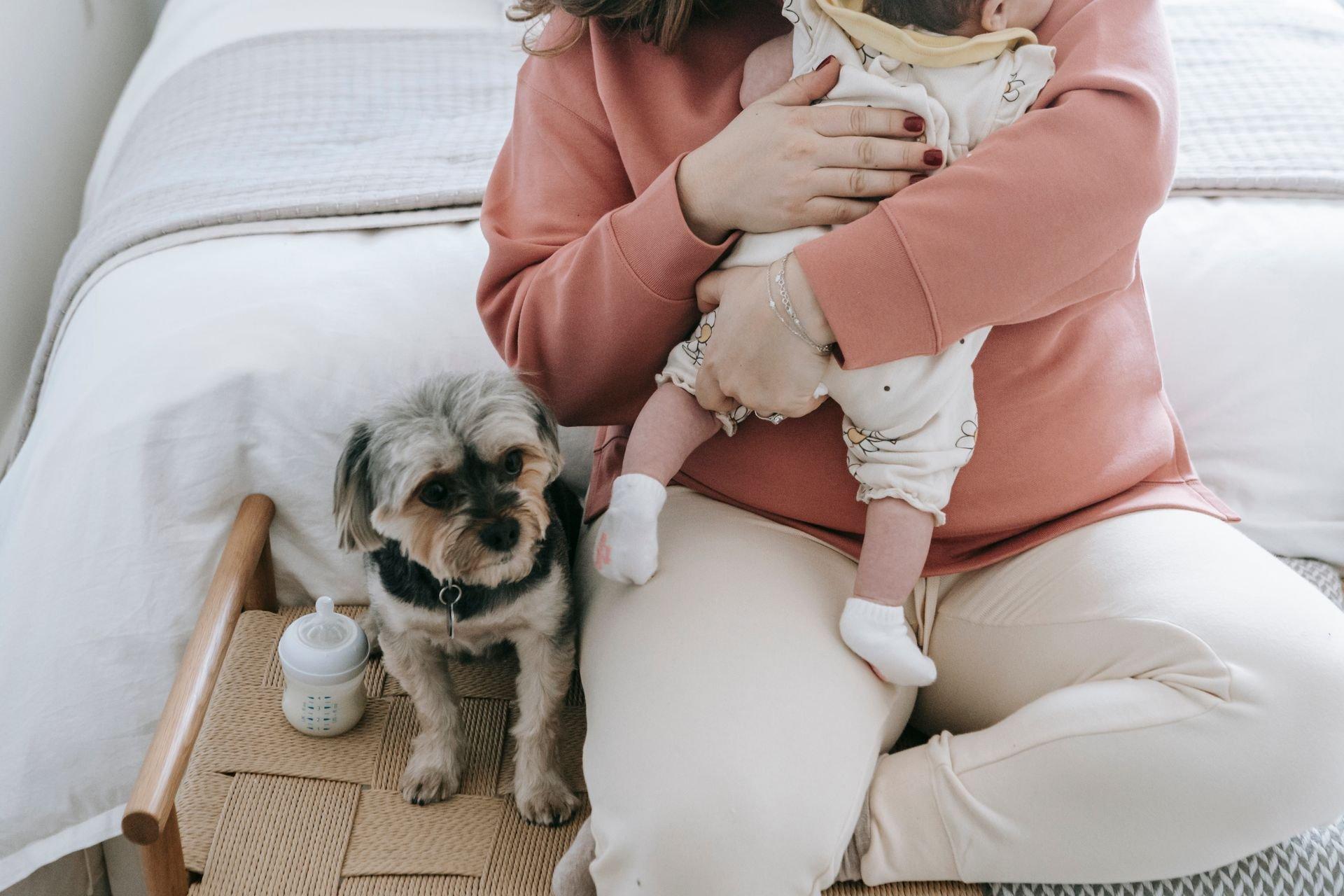
A new baby changes everything for your dog too: new sounds and smells, new furniture, visitors, and less time and attention from you. Most of that can be practised in advance, so your dog is used to the new normal before the baby arrives.
In short: start months before the birth. Make changes to routine gradually, get your dog used to baby sounds, smells and equipment, and brush up on settling, recall and loose-lead walking. When the baby comes home, keep introductions calm and short, and never leave your dog and baby alone together.
Before the birth
The earlier you start preparing your dog, the more time they'll have to adjust1.
- Change routines gradually. Think about what will change, such as less attention, shorter walks, rooms your dog can't go into and more visitors, and introduce those changes long before your due date1.
- Brush up on training. Settling, recall and loose-lead walking will all help once you're walking with a pram. Use rewards your dog enjoys and go slowly1. Our guides to recall and pulling on the lead can help.
- Introduce baby sounds. Play recordings of babies at a very low volume while your dog is relaxed. If they seem worried, stop, and next time go down a volume level1.
- Introduce baby smells. Unwashed baby clothes or blankets from friends with babies are a useful way to get your dog used to new scents1.
- Set up baby equipment early. Put the pram, highchair, playpen and toys out in the months before the birth, so your dog has plenty of time to get used to them1.
- Use baby gates and a safe space. Teach your dog to settle on the other side of a gate or in a crate. It's also a handy place for them when visitors such as health visitors come round1.
Bringing your baby home
- Greet your dog first. Your dog may be very excited to see you. Ask someone else to hold the baby while you say hello, and keep your voice calm2.
- Let your dog get used to the baby's scent. A blanket with your baby's smell, brought home before you are, can help introductions2.
- Keep the first meeting calm. If your dog is calm and relaxed, let them approach and sniff your baby gently if they want to, but don't force it. A helper can keep them on a loose lead2.
- Watch their body language. If your dog seems uncomfortable at any point, calmly stop the introduction2. Our guide to nervous and anxious dogs lists the signs to look for.
- Reward calm behaviour. Praise your dog for being calm and gentle, and don't give them attention for jumping up2.
Life with a dog and a baby
- Never leave them alone together. Always be actively engaged when you're supervising, and never leave dogs and babies alone12.
- Stick to your dog's routine as far as you can, including exercise, training and feeding2.
- Give your dog a quiet den away from the hustle and bustle, where they can relax undisturbed2.
When to get help
If your dog's behaviour worries you, before or after the birth, the Dogs Trust Behaviour Support Line gives free expert advice2. If your dog growls, snaps or guards food, toys or places, read our resource guarding guide and speak to your vet, who can refer you to an accredited behaviourist. Clinical Animal Behaviourists, Veterinary Behaviourists and Accredited Animal Behaviourists only see clients on veterinary referral (ABTC). Our guide to trainers, behaviourists and vets explains the difference.
Free help
The charity Dogs Trust runs a free Behaviour Support Line for UK dog owners, and can help you prepare your dog for your new arrival1.